Rivers without rainThe Reality of a River WorldHow to stop a waterfallSemi-liquid atmosphere - Weather and...
Thesis on avalanche prediction using One Class SVM
Why does nature favour the Laplacian?
Usage of 万 (wàn): ten thousands or just a great number?
Could the terminal length of components like resistors be reduced?
Which big number is bigger?
What makes accurate emulation of old systems a difficult task?
How do I produce this Greek letter koppa: Ϟ in pdfLaTeX?
Is Diceware more secure than a long passphrase?
How can the Githyanki Commander Supreme move while insubstantial?
can anyone help me with this awful query plan?
As an international instructor, should I openly talk about my accent?
How did Captain America use this in Avengers: Endgame?
Don’t seats that recline flat defeat the purpose of having seatbelts?
Mistake in years of experience in resume?
Elements that can bond to themselves?
What term is being referred to with "reflected-sound-of-underground-spirits"?
constexpr member function with std::vector data member in C++
How to not starve gigantic beasts
Does any yogic siddhi let a human to be simultaneously present at two different places physically?
How come there are so many candidates for the 2020 Democratic party presidential nomination?
Why did C use the -> operator instead of reusing the . operator?
Why do games have consumables?
What is meant by "Prämie" in this letter? Do I have to pay it or it is just a reminder?
Is there a way to generate a list of distinct numbers such that no two subsets ever have an equal sum?
Rivers without rain
The Reality of a River WorldHow to stop a waterfallSemi-liquid atmosphere - Weather and ClimateEntirely too much mana from the heavensExoplanetary Review: Acid RainCan plants survive without animals?A World Without BugsWhat would be the minimum percentage of water for a livable earth?How can I explain rainforests in a world with little, localized rain?What is the plausibility of settlements developed near rivers of lavaRain powered transport
$begingroup$
On Earth, rivers are possible because rain and snow deposit water in high places. That water then forms rivers when flowing to lower places.
Would it be possible to have the phenomena of rivers flowing into oceans on a planet where raining and snowing do not happen? If so, under what conditions could that happen?
This question is different from this previous one: The Reality of a River World because the accepted answer there proposes a mechanism through which water does not flow from higher to lower places, but only follows tides. I'd like a mechanism to take water to higher places, from where it can flow and form rivers, but not depending on precipitation.
reality-check environment geography rivers
edited 53 mins ago

Cyn
12.4k12758
asked 1 hour ago

RenanRenan
54.7k15124269
$endgroup$
add a comment |
$begingroup$
On Earth, rivers are possible because rain and snow deposit water in high places. That water then forms rivers when flowing to lower places.
Would it be possible to have the phenomena of rivers flowing into oceans on a planet where raining and snowing do not happen? If so, under what conditions could that happen?
This question is different from this previous one: The Reality of a River World because the accepted answer there proposes a mechanism through which water does not flow from higher to lower places, but only follows tides. I'd like a mechanism to take water to higher places, from where it can flow and form rivers, but not depending on precipitation.
reality-check environment geography rivers
edited 53 mins ago
Cyn
12.4k12758
asked 1 hour ago
RenanRenan
54.7k15124269
$endgroup$
$begingroup$
I tweaked a couple grammatical things and added a couple of tags. I hope that works for ya :-)
$endgroup$
– Cyn
52 mins ago
$begingroup$
@Cyn thank you :)
$endgroup$
– Renan
35 mins ago
add a comment |
$begingroup$
On Earth, rivers are possible because rain and snow deposit water in high places. That water then forms rivers when flowing to lower places.
Would it be possible to have the phenomena of rivers flowing into oceans on a planet where raining and snowing do not happen? If so, under what conditions could that happen?
This question is different from this previous one: The Reality of a River World because the accepted answer there proposes a mechanism through which water does not flow from higher to lower places, but only follows tides. I'd like a mechanism to take water to higher places, from where it can flow and form rivers, but not depending on precipitation.
reality-check environment geography rivers
edited 53 mins ago
Cyn
12.4k12758
asked 1 hour ago
RenanRenan
54.7k15124269
$endgroup$
On Earth, rivers are possible because rain and snow deposit water in high places. That water then forms rivers when flowing to lower places.
Would it be possible to have the phenomena of rivers flowing into oceans on a planet where raining and snowing do not happen? If so, under what conditions could that happen?
This question is different from this previous one: The Reality of a River World because the accepted answer there proposes a mechanism through which water does not flow from higher to lower places, but only follows tides. I'd like a mechanism to take water to higher places, from where it can flow and form rivers, but not depending on precipitation.
reality-check environment geography rivers
reality-check environment geography rivers
edited 53 mins ago
Cyn
12.4k12758
asked 1 hour ago
RenanRenan
54.7k15124269
edited 53 mins ago
Cyn
12.4k12758
asked 1 hour ago
RenanRenan
54.7k15124269
edited 53 mins ago
Cyn
12.4k12758
edited 53 mins ago
Cyn
12.4k12758
edited 53 mins ago
Cyn
12.4k12758
12.4k12758
asked 1 hour ago
RenanRenan
54.7k15124269
asked 1 hour ago
RenanRenan
54.7k15124269
asked 1 hour ago
RenanRenan
54.7k15124269
54.7k15124269
$begingroup$
I tweaked a couple grammatical things and added a couple of tags. I hope that works for ya :-)
$endgroup$
– Cyn
52 mins ago
$begingroup$
@Cyn thank you :)
$endgroup$
– Renan
35 mins ago
add a comment |
$begingroup$
I tweaked a couple grammatical things and added a couple of tags. I hope that works for ya :-)
$endgroup$
– Cyn
52 mins ago
$begingroup$
@Cyn thank you :)
$endgroup$
– Renan
35 mins ago
$begingroup$
I tweaked a couple grammatical things and added a couple of tags. I hope that works for ya :-)
$endgroup$
– Cyn
52 mins ago
$begingroup$
I tweaked a couple grammatical things and added a couple of tags. I hope that works for ya :-)
$endgroup$
– Cyn
52 mins ago
$begingroup$
@Cyn thank you :)
$endgroup$
– Renan
35 mins ago
$begingroup$
@Cyn thank you :)
$endgroup$
– Renan
35 mins ago
add a comment |
3 Answers
3
active
oldest
votes
$begingroup$
So there's only a few ways this could happen 'realistically'.
1) Water comes from underground. This would require a lot of really unlikely scenarios though and probably wouldn't be stable for long. Imagine a tube running from under the oceans all the way to the middle of the mountain ranges. Then having the temperature and pressure force the water to the surface, like real hot springs and geysers (Look to Yellowstone for an example). I say this is unlikely because the immense pressures and extreme distance the water would have to travel would destroy this system.
You could have an extremely large reservoir underground that gets pumped up by geological activity, but it would run eventually.
2) What Milloupe said. This does already happen, but having it supply a planet's worth of rivers would be unlikely.
3) Special plant life/ trees that pull water vapor out of the air and actually release water into their soil. This would require constant humidity and probably wouldn't work at higher latitudes, if at all.
4) Massive glaciers that are melting over time. Perhaps an ancient lake was lifted by mountains and froze solid. Now it is melting and has carved a path downhill.
The entire concept isn't super plausible without fundamentally changing the physical properties of water though. You'd still have water evaporating and then wanting to condense when the temperature and pressure change.
answered 47 mins ago

abestrangeabestrange
2,0812413
$endgroup$
add a comment |
$begingroup$
The first thing which comes to my mind is having a water cycle similar to the one we have on earth, except that instead of raining the water condenses only once near the top of the mountains, and drips directly back to the rivers/glaciers. It's not very different from what we have, and probably happens sometimes on earth, when correct temperature/pressure conditions are met.
answered 1 hour ago

MilloupeMilloupe
212
New contributor
Milloupe is a new contributor to this site. Take care in asking for clarification, commenting, and answering.
Check out our Code of Conduct.
$endgroup$
3
$begingroup$
lol water "dripping" from condensated ocean water is called rain..
$endgroup$
– Rob
57 mins ago
1
$begingroup$
@Rob Or snow. That would technically give you rivers without rain.
$endgroup$
– Eth
56 mins ago
$begingroup$
@Rob I think this is about condensation by contact with mountaintops.
$endgroup$
– Renan
52 mins ago
$begingroup$
Snow doesn't drip. In any case, the OP said no snow. @Renan if the condensation is forming on the rock surface at altitude it is most likely raining and or snowing in that region.
$endgroup$
– Rob
49 mins ago
add a comment |
$begingroup$
Would vulcanism work for you?
Vulcanic eruptions can create flowes without rain.
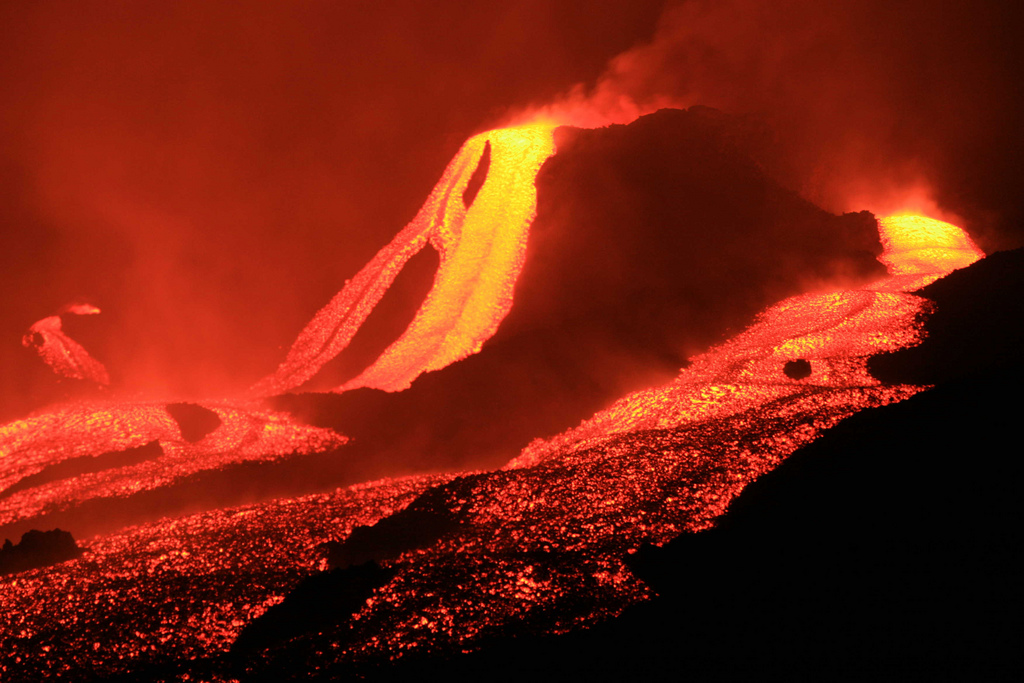
The obvious candidate would be Magma flows.
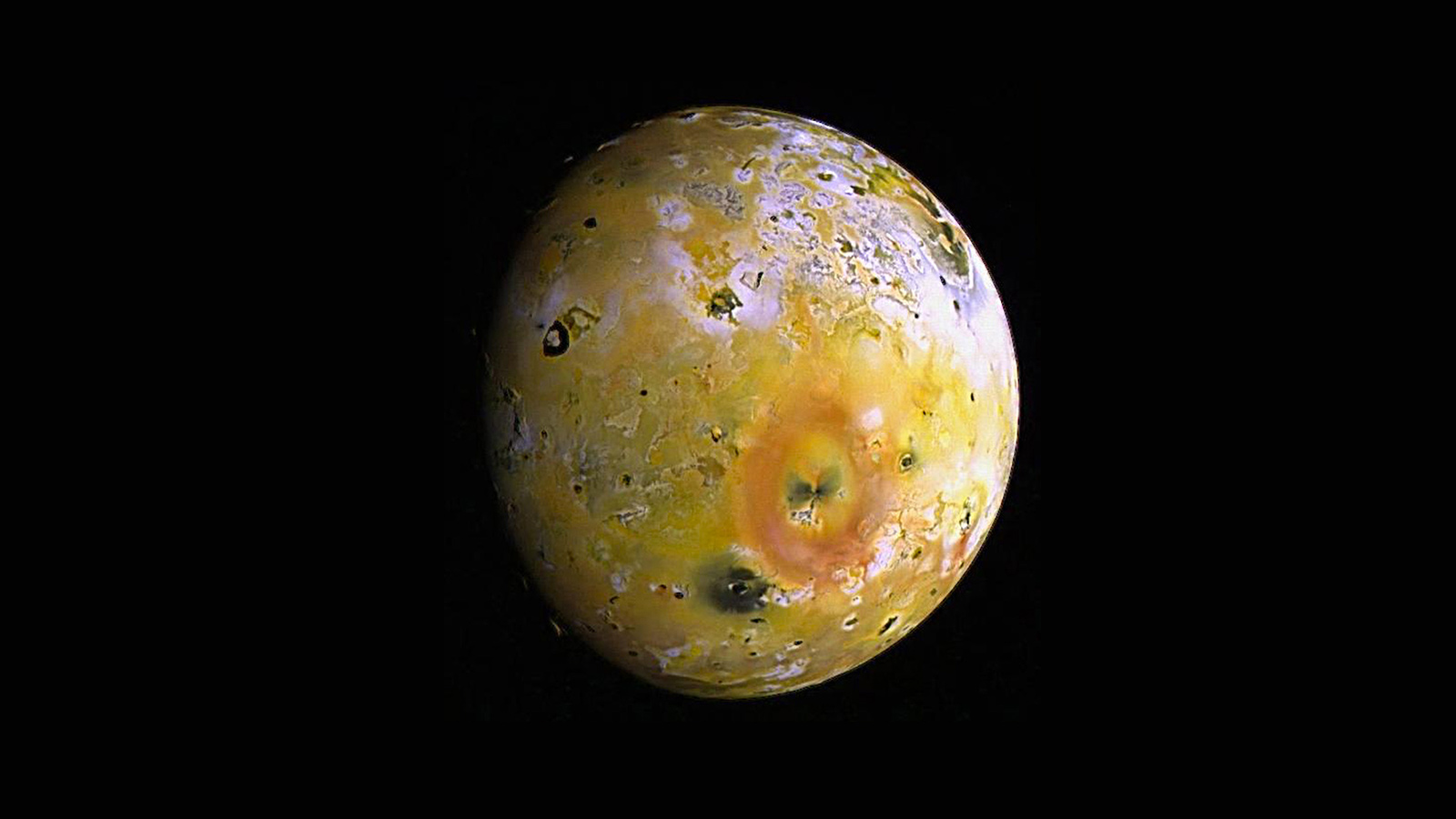
This is the moon Io, magmaflows of basalt lava crawl over the surface for hundreds of kilometers [6].
If you want liquids other than molten rock, check out cryo-vulcanism [1]. Water, ammonia, methane or some mixed slurries don't exactly make for exiting rivers, but something will undeniably flow downhill.
Finally ocean currents could be considered rivers. While this might not exactly meet your requirements it seemed worth mentioning. Europa would be another moon of Jupiter fitting your conditions in this chase.
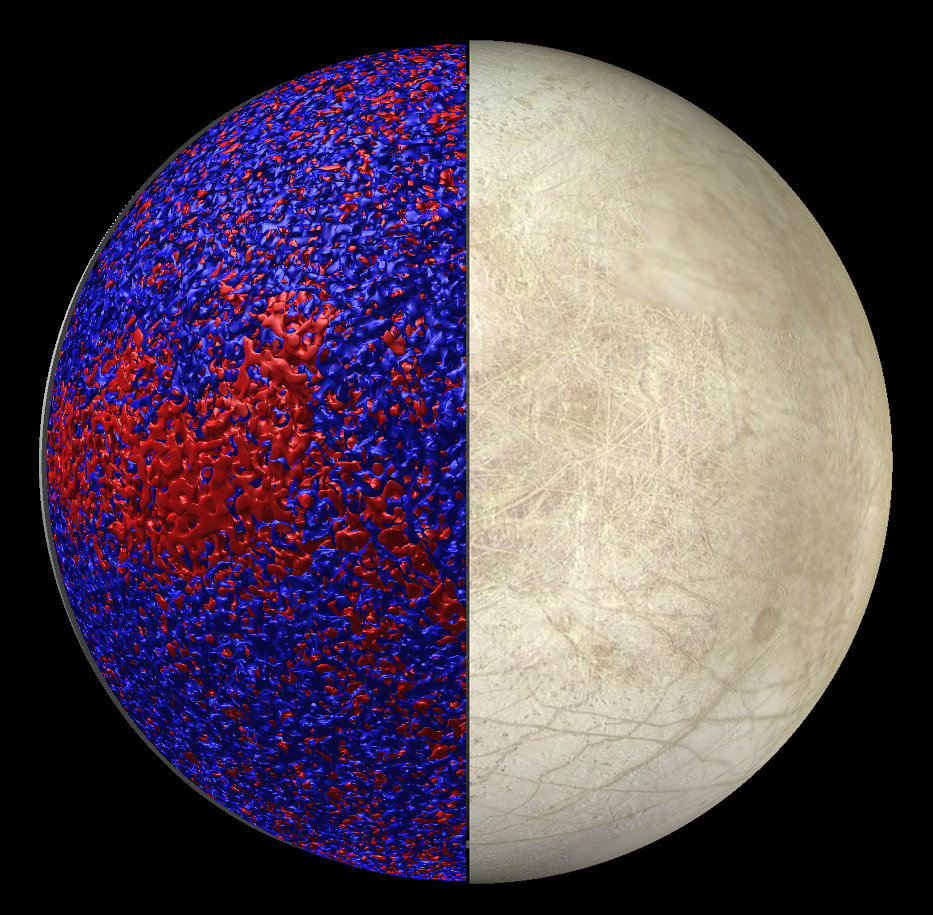
While the radial convection currents shown here could be considered to strech the definition of river past its breaking point, the western equatorial flow and the two polar eastwards flows discribed at the end of this article [2] could be seen as rivers. They are compared to our earthly gulf stream.
[1] https://en.m.wikipedia.org/wiki/Cryovolcano
[2] https://www.mpg.de/7655677/Europa-heat-pump-ocean
[6] https://en.m.wikipedia.org/wiki/Volcanology_of_Io
answered 30 mins ago

TheDyingOfLightTheDyingOfLight
1,07513
$endgroup$
2
$begingroup$
Perhaps it could be a water world? Where tectonic plates float on varying densities of water rather than magma?
$endgroup$
– Rob
25 mins ago
$begingroup$
@Rob That would be cryo-vulcanism. You got a big plate of frozen water floating ontop of a vast ocean. My Europa example shows this.
$endgroup$
– TheDyingOfLight
23 mins ago
add a comment |
Your Answer
StackExchange.ready(function() {
var channelOptions = {
tags: "".split(" "),
id: "579"
};
initTagRenderer("".split(" "), "".split(" "), channelOptions);
StackExchange.using("externalEditor", function() {
// Have to fire editor after snippets, if snippets enabled
if (StackExchange.settings.snippets.snippetsEnabled) {
StackExchange.using("snippets", function() {
createEditor();
});
}
else {
createEditor();
}
});
function createEditor() {
StackExchange.prepareEditor({
heartbeatType: 'answer',
autoActivateHeartbeat: false,
convertImagesToLinks: false,
noModals: true,
showLowRepImageUploadWarning: true,
reputationToPostImages: null,
bindNavPrevention: true,
postfix: "",
imageUploader: {
brandingHtml: "Powered by u003ca class="icon-imgur-white" href="https://imgur.com/"u003eu003c/au003e",
contentPolicyHtml: "User contributions licensed under u003ca href="https://creativecommons.org/licenses/by-sa/3.0/"u003ecc by-sa 3.0 with attribution requiredu003c/au003e u003ca href="https://stackoverflow.com/legal/content-policy"u003e(content policy)u003c/au003e",
allowUrls: true
},
noCode: true, onDemand: true,
discardSelector: ".discard-answer"
,immediatelyShowMarkdownHelp:true
});
}
});
Sign up or log in
StackExchange.ready(function () {
StackExchange.helpers.onClickDraftSave('#login-link');
});
Sign up using Google
Sign up using Facebook
Sign up using Email and Password
Post as a guest
Required, but never shown
StackExchange.ready(
function () {
StackExchange.openid.initPostLogin('.new-post-login', 'https%3a%2f%2fworldbuilding.stackexchange.com%2fquestions%2f145782%2frivers-without-rain%23new-answer', 'question_page');
}
);
Post as a guest
Required, but never shown
3 Answers
3
active
oldest
votes
3 Answers
3
active
oldest
votes
active
oldest
votes
active
oldest
votes
$begingroup$
So there's only a few ways this could happen 'realistically'.
1) Water comes from underground. This would require a lot of really unlikely scenarios though and probably wouldn't be stable for long. Imagine a tube running from under the oceans all the way to the middle of the mountain ranges. Then having the temperature and pressure force the water to the surface, like real hot springs and geysers (Look to Yellowstone for an example). I say this is unlikely because the immense pressures and extreme distance the water would have to travel would destroy this system.
You could have an extremely large reservoir underground that gets pumped up by geological activity, but it would run eventually.
2) What Milloupe said. This does already happen, but having it supply a planet's worth of rivers would be unlikely.
3) Special plant life/ trees that pull water vapor out of the air and actually release water into their soil. This would require constant humidity and probably wouldn't work at higher latitudes, if at all.
4) Massive glaciers that are melting over time. Perhaps an ancient lake was lifted by mountains and froze solid. Now it is melting and has carved a path downhill.
The entire concept isn't super plausible without fundamentally changing the physical properties of water though. You'd still have water evaporating and then wanting to condense when the temperature and pressure change.
answered 47 mins ago
abestrangeabestrange
2,0812413
$endgroup$
add a comment |
$begingroup$
So there's only a few ways this could happen 'realistically'.
1) Water comes from underground. This would require a lot of really unlikely scenarios though and probably wouldn't be stable for long. Imagine a tube running from under the oceans all the way to the middle of the mountain ranges. Then having the temperature and pressure force the water to the surface, like real hot springs and geysers (Look to Yellowstone for an example). I say this is unlikely because the immense pressures and extreme distance the water would have to travel would destroy this system.
You could have an extremely large reservoir underground that gets pumped up by geological activity, but it would run eventually.
2) What Milloupe said. This does already happen, but having it supply a planet's worth of rivers would be unlikely.
3) Special plant life/ trees that pull water vapor out of the air and actually release water into their soil. This would require constant humidity and probably wouldn't work at higher latitudes, if at all.
4) Massive glaciers that are melting over time. Perhaps an ancient lake was lifted by mountains and froze solid. Now it is melting and has carved a path downhill.
The entire concept isn't super plausible without fundamentally changing the physical properties of water though. You'd still have water evaporating and then wanting to condense when the temperature and pressure change.
answered 47 mins ago
abestrangeabestrange
2,0812413
$endgroup$
add a comment |
$begingroup$
So there's only a few ways this could happen 'realistically'.
1) Water comes from underground. This would require a lot of really unlikely scenarios though and probably wouldn't be stable for long. Imagine a tube running from under the oceans all the way to the middle of the mountain ranges. Then having the temperature and pressure force the water to the surface, like real hot springs and geysers (Look to Yellowstone for an example). I say this is unlikely because the immense pressures and extreme distance the water would have to travel would destroy this system.
You could have an extremely large reservoir underground that gets pumped up by geological activity, but it would run eventually.
2) What Milloupe said. This does already happen, but having it supply a planet's worth of rivers would be unlikely.
3) Special plant life/ trees that pull water vapor out of the air and actually release water into their soil. This would require constant humidity and probably wouldn't work at higher latitudes, if at all.
4) Massive glaciers that are melting over time. Perhaps an ancient lake was lifted by mountains and froze solid. Now it is melting and has carved a path downhill.
The entire concept isn't super plausible without fundamentally changing the physical properties of water though. You'd still have water evaporating and then wanting to condense when the temperature and pressure change.
answered 47 mins ago
abestrangeabestrange
2,0812413
$endgroup$
So there's only a few ways this could happen 'realistically'.
1) Water comes from underground. This would require a lot of really unlikely scenarios though and probably wouldn't be stable for long. Imagine a tube running from under the oceans all the way to the middle of the mountain ranges. Then having the temperature and pressure force the water to the surface, like real hot springs and geysers (Look to Yellowstone for an example). I say this is unlikely because the immense pressures and extreme distance the water would have to travel would destroy this system.
You could have an extremely large reservoir underground that gets pumped up by geological activity, but it would run eventually.
2) What Milloupe said. This does already happen, but having it supply a planet's worth of rivers would be unlikely.
3) Special plant life/ trees that pull water vapor out of the air and actually release water into their soil. This would require constant humidity and probably wouldn't work at higher latitudes, if at all.
4) Massive glaciers that are melting over time. Perhaps an ancient lake was lifted by mountains and froze solid. Now it is melting and has carved a path downhill.
The entire concept isn't super plausible without fundamentally changing the physical properties of water though. You'd still have water evaporating and then wanting to condense when the temperature and pressure change.
answered 47 mins ago
abestrangeabestrange
2,0812413
answered 47 mins ago
abestrangeabestrange
2,0812413
answered 47 mins ago
abestrangeabestrange
2,0812413
answered 47 mins ago
abestrangeabestrange
2,0812413
2,0812413
add a comment |
add a comment |
$begingroup$
The first thing which comes to my mind is having a water cycle similar to the one we have on earth, except that instead of raining the water condenses only once near the top of the mountains, and drips directly back to the rivers/glaciers. It's not very different from what we have, and probably happens sometimes on earth, when correct temperature/pressure conditions are met.
answered 1 hour ago
MilloupeMilloupe
212
New contributor
Milloupe is a new contributor to this site. Take care in asking for clarification, commenting, and answering.
Check out our Code of Conduct.
$endgroup$
3
$begingroup$
lol water "dripping" from condensated ocean water is called rain..
$endgroup$
– Rob
57 mins ago
1
$begingroup$
@Rob Or snow. That would technically give you rivers without rain.
$endgroup$
– Eth
56 mins ago
$begingroup$
@Rob I think this is about condensation by contact with mountaintops.
$endgroup$
– Renan
52 mins ago
$begingroup$
Snow doesn't drip. In any case, the OP said no snow. @Renan if the condensation is forming on the rock surface at altitude it is most likely raining and or snowing in that region.
$endgroup$
– Rob
49 mins ago
add a comment |
$begingroup$
The first thing which comes to my mind is having a water cycle similar to the one we have on earth, except that instead of raining the water condenses only once near the top of the mountains, and drips directly back to the rivers/glaciers. It's not very different from what we have, and probably happens sometimes on earth, when correct temperature/pressure conditions are met.
answered 1 hour ago
MilloupeMilloupe
212
New contributor
Milloupe is a new contributor to this site. Take care in asking for clarification, commenting, and answering.
Check out our Code of Conduct.
$endgroup$
3
$begingroup$
lol water "dripping" from condensated ocean water is called rain..
$endgroup$
– Rob
57 mins ago
1
$begingroup$
@Rob Or snow. That would technically give you rivers without rain.
$endgroup$
– Eth
56 mins ago
$begingroup$
@Rob I think this is about condensation by contact with mountaintops.
$endgroup$
– Renan
52 mins ago
$begingroup$
Snow doesn't drip. In any case, the OP said no snow. @Renan if the condensation is forming on the rock surface at altitude it is most likely raining and or snowing in that region.
$endgroup$
– Rob
49 mins ago
add a comment |
$begingroup$
The first thing which comes to my mind is having a water cycle similar to the one we have on earth, except that instead of raining the water condenses only once near the top of the mountains, and drips directly back to the rivers/glaciers. It's not very different from what we have, and probably happens sometimes on earth, when correct temperature/pressure conditions are met.
answered 1 hour ago
MilloupeMilloupe
212
New contributor
Milloupe is a new contributor to this site. Take care in asking for clarification, commenting, and answering.
Check out our Code of Conduct.
$endgroup$
The first thing which comes to my mind is having a water cycle similar to the one we have on earth, except that instead of raining the water condenses only once near the top of the mountains, and drips directly back to the rivers/glaciers. It's not very different from what we have, and probably happens sometimes on earth, when correct temperature/pressure conditions are met.
answered 1 hour ago
MilloupeMilloupe
212
New contributor
Milloupe is a new contributor to this site. Take care in asking for clarification, commenting, and answering.
Check out our Code of Conduct.
answered 1 hour ago
MilloupeMilloupe
212
New contributor
Milloupe is a new contributor to this site. Take care in asking for clarification, commenting, and answering.
Check out our Code of Conduct.
answered 1 hour ago
MilloupeMilloupe
212
answered 1 hour ago
MilloupeMilloupe
212
212
New contributor
Milloupe is a new contributor to this site. Take care in asking for clarification, commenting, and answering.
Check out our Code of Conduct.
New contributor
Milloupe is a new contributor to this site. Take care in asking for clarification, commenting, and answering.
Check out our Code of Conduct.
Milloupe is a new contributor to this site. Take care in asking for clarification, commenting, and answering.
Check out our Code of Conduct.
3
$begingroup$
lol water "dripping" from condensated ocean water is called rain..
$endgroup$
– Rob
57 mins ago
1
$begingroup$
@Rob Or snow. That would technically give you rivers without rain.
$endgroup$
– Eth
56 mins ago
$begingroup$
@Rob I think this is about condensation by contact with mountaintops.
$endgroup$
– Renan
52 mins ago
$begingroup$
Snow doesn't drip. In any case, the OP said no snow. @Renan if the condensation is forming on the rock surface at altitude it is most likely raining and or snowing in that region.
$endgroup$
– Rob
49 mins ago
add a comment |
3
$begingroup$
lol water "dripping" from condensated ocean water is called rain..
$endgroup$
– Rob
57 mins ago
1
$begingroup$
@Rob Or snow. That would technically give you rivers without rain.
$endgroup$
– Eth
56 mins ago
$begingroup$
@Rob I think this is about condensation by contact with mountaintops.
$endgroup$
– Renan
52 mins ago
$begingroup$
Snow doesn't drip. In any case, the OP said no snow. @Renan if the condensation is forming on the rock surface at altitude it is most likely raining and or snowing in that region.
$endgroup$
– Rob
49 mins ago
3
3
$begingroup$
lol water "dripping" from condensated ocean water is called rain..
$endgroup$
– Rob
57 mins ago
$begingroup$
lol water "dripping" from condensated ocean water is called rain..
$endgroup$
– Rob
57 mins ago
1
1
$begingroup$
@Rob Or snow. That would technically give you rivers without rain.
$endgroup$
– Eth
56 mins ago
$begingroup$
@Rob Or snow. That would technically give you rivers without rain.
$endgroup$
– Eth
56 mins ago
$begingroup$
@Rob I think this is about condensation by contact with mountaintops.
$endgroup$
– Renan
52 mins ago
$begingroup$
@Rob I think this is about condensation by contact with mountaintops.
$endgroup$
– Renan
52 mins ago
$begingroup$
Snow doesn't drip. In any case, the OP said no snow. @Renan if the condensation is forming on the rock surface at altitude it is most likely raining and or snowing in that region.
$endgroup$
– Rob
49 mins ago
$begingroup$
Snow doesn't drip. In any case, the OP said no snow. @Renan if the condensation is forming on the rock surface at altitude it is most likely raining and or snowing in that region.
$endgroup$
– Rob
49 mins ago
add a comment |
$begingroup$
Would vulcanism work for you?
Vulcanic eruptions can create flowes without rain.
The obvious candidate would be Magma flows.
This is the moon Io, magmaflows of basalt lava crawl over the surface for hundreds of kilometers [6].
If you want liquids other than molten rock, check out cryo-vulcanism [1]. Water, ammonia, methane or some mixed slurries don't exactly make for exiting rivers, but something will undeniably flow downhill.
Finally ocean currents could be considered rivers. While this might not exactly meet your requirements it seemed worth mentioning. Europa would be another moon of Jupiter fitting your conditions in this chase.
While the radial convection currents shown here could be considered to strech the definition of river past its breaking point, the western equatorial flow and the two polar eastwards flows discribed at the end of this article [2] could be seen as rivers. They are compared to our earthly gulf stream.
[1] https://en.m.wikipedia.org/wiki/Cryovolcano
[2] https://www.mpg.de/7655677/Europa-heat-pump-ocean
[6] https://en.m.wikipedia.org/wiki/Volcanology_of_Io
answered 30 mins ago
TheDyingOfLightTheDyingOfLight
1,07513
$endgroup$
2
$begingroup$
Perhaps it could be a water world? Where tectonic plates float on varying densities of water rather than magma?
$endgroup$
– Rob
25 mins ago
$begingroup$
@Rob That would be cryo-vulcanism. You got a big plate of frozen water floating ontop of a vast ocean. My Europa example shows this.
$endgroup$
– TheDyingOfLight
23 mins ago
add a comment |
$begingroup$
Would vulcanism work for you?
Vulcanic eruptions can create flowes without rain.
The obvious candidate would be Magma flows.
This is the moon Io, magmaflows of basalt lava crawl over the surface for hundreds of kilometers [6].
If you want liquids other than molten rock, check out cryo-vulcanism [1]. Water, ammonia, methane or some mixed slurries don't exactly make for exiting rivers, but something will undeniably flow downhill.
Finally ocean currents could be considered rivers. While this might not exactly meet your requirements it seemed worth mentioning. Europa would be another moon of Jupiter fitting your conditions in this chase.
While the radial convection currents shown here could be considered to strech the definition of river past its breaking point, the western equatorial flow and the two polar eastwards flows discribed at the end of this article [2] could be seen as rivers. They are compared to our earthly gulf stream.
[1] https://en.m.wikipedia.org/wiki/Cryovolcano
[2] https://www.mpg.de/7655677/Europa-heat-pump-ocean
[6] https://en.m.wikipedia.org/wiki/Volcanology_of_Io
answered 30 mins ago
TheDyingOfLightTheDyingOfLight
1,07513
$endgroup$
2
$begingroup$
Perhaps it could be a water world? Where tectonic plates float on varying densities of water rather than magma?
$endgroup$
– Rob
25 mins ago
$begingroup$
@Rob That would be cryo-vulcanism. You got a big plate of frozen water floating ontop of a vast ocean. My Europa example shows this.
$endgroup$
– TheDyingOfLight
23 mins ago
add a comment |
$begingroup$
Would vulcanism work for you?
Vulcanic eruptions can create flowes without rain.
The obvious candidate would be Magma flows.
This is the moon Io, magmaflows of basalt lava crawl over the surface for hundreds of kilometers [6].
If you want liquids other than molten rock, check out cryo-vulcanism [1]. Water, ammonia, methane or some mixed slurries don't exactly make for exiting rivers, but something will undeniably flow downhill.
Finally ocean currents could be considered rivers. While this might not exactly meet your requirements it seemed worth mentioning. Europa would be another moon of Jupiter fitting your conditions in this chase.
While the radial convection currents shown here could be considered to strech the definition of river past its breaking point, the western equatorial flow and the two polar eastwards flows discribed at the end of this article [2] could be seen as rivers. They are compared to our earthly gulf stream.
[1] https://en.m.wikipedia.org/wiki/Cryovolcano
[2] https://www.mpg.de/7655677/Europa-heat-pump-ocean
[6] https://en.m.wikipedia.org/wiki/Volcanology_of_Io
answered 30 mins ago
TheDyingOfLightTheDyingOfLight
1,07513
$endgroup$
Would vulcanism work for you?
Vulcanic eruptions can create flowes without rain.
The obvious candidate would be Magma flows.
This is the moon Io, magmaflows of basalt lava crawl over the surface for hundreds of kilometers [6].
If you want liquids other than molten rock, check out cryo-vulcanism [1]. Water, ammonia, methane or some mixed slurries don't exactly make for exiting rivers, but something will undeniably flow downhill.
Finally ocean currents could be considered rivers. While this might not exactly meet your requirements it seemed worth mentioning. Europa would be another moon of Jupiter fitting your conditions in this chase.
While the radial convection currents shown here could be considered to strech the definition of river past its breaking point, the western equatorial flow and the two polar eastwards flows discribed at the end of this article [2] could be seen as rivers. They are compared to our earthly gulf stream.
[1] https://en.m.wikipedia.org/wiki/Cryovolcano
[2] https://www.mpg.de/7655677/Europa-heat-pump-ocean
[6] https://en.m.wikipedia.org/wiki/Volcanology_of_Io
answered 30 mins ago
TheDyingOfLightTheDyingOfLight
1,07513
edited 25 mins ago
answered 30 mins ago
TheDyingOfLightTheDyingOfLight
1,07513
answered 30 mins ago
TheDyingOfLightTheDyingOfLight
1,07513
answered 30 mins ago
TheDyingOfLightTheDyingOfLight
1,07513
1,07513
2
$begingroup$
Perhaps it could be a water world? Where tectonic plates float on varying densities of water rather than magma?
$endgroup$
– Rob
25 mins ago
$begingroup$
@Rob That would be cryo-vulcanism. You got a big plate of frozen water floating ontop of a vast ocean. My Europa example shows this.
$endgroup$
– TheDyingOfLight
23 mins ago
add a comment |
2
$begingroup$
Perhaps it could be a water world? Where tectonic plates float on varying densities of water rather than magma?
$endgroup$
– Rob
25 mins ago
$begingroup$
@Rob That would be cryo-vulcanism. You got a big plate of frozen water floating ontop of a vast ocean. My Europa example shows this.
$endgroup$
– TheDyingOfLight
23 mins ago
2
2
$begingroup$
Perhaps it could be a water world? Where tectonic plates float on varying densities of water rather than magma?
$endgroup$
– Rob
25 mins ago
$begingroup$
Perhaps it could be a water world? Where tectonic plates float on varying densities of water rather than magma?
$endgroup$
– Rob
25 mins ago
$begingroup$
@Rob That would be cryo-vulcanism. You got a big plate of frozen water floating ontop of a vast ocean. My Europa example shows this.
$endgroup$
– TheDyingOfLight
23 mins ago
$begingroup$
@Rob That would be cryo-vulcanism. You got a big plate of frozen water floating ontop of a vast ocean. My Europa example shows this.
$endgroup$
– TheDyingOfLight
23 mins ago
add a comment |
Thanks for contributing an answer to Worldbuilding Stack Exchange!
- Please be sure to answer the question. Provide details and share your research!
But avoid …
- Asking for help, clarification, or responding to other answers.
- Making statements based on opinion; back them up with references or personal experience.
Use MathJax to format equations. MathJax reference.
To learn more, see our tips on writing great answers.
Sign up or log in
StackExchange.ready(function () {
StackExchange.helpers.onClickDraftSave('#login-link');
});
Sign up using Google
Sign up using Facebook
Sign up using Email and Password
Post as a guest
Required, but never shown
StackExchange.ready(
function () {
StackExchange.openid.initPostLogin('.new-post-login', 'https%3a%2f%2fworldbuilding.stackexchange.com%2fquestions%2f145782%2frivers-without-rain%23new-answer', 'question_page');
}
);
Post as a guest
Required, but never shown
Sign up or log in
StackExchange.ready(function () {
StackExchange.helpers.onClickDraftSave('#login-link');
});
Sign up using Google
Sign up using Facebook
Sign up using Email and Password
Post as a guest
Required, but never shown
Sign up or log in
StackExchange.ready(function () {
StackExchange.helpers.onClickDraftSave('#login-link');
});
Sign up using Google
Sign up using Facebook
Sign up using Email and Password
Post as a guest
Required, but never shown
Sign up or log in
StackExchange.ready(function () {
StackExchange.helpers.onClickDraftSave('#login-link');
});
Sign up using Google
Sign up using Facebook
Sign up using Email and Password
Sign up using Google
Sign up using Facebook
Sign up using Email and Password
Post as a guest
Required, but never shown
Required, but never shown
Required, but never shown
Required, but never shown
Required, but never shown
Required, but never shown
Required, but never shown
Required, but never shown
Required, but never shown


$begingroup$
I tweaked a couple grammatical things and added a couple of tags. I hope that works for ya :-)
$endgroup$
– Cyn
52 mins ago
$begingroup$
@Cyn thank you :)
$endgroup$
– Renan
35 mins ago